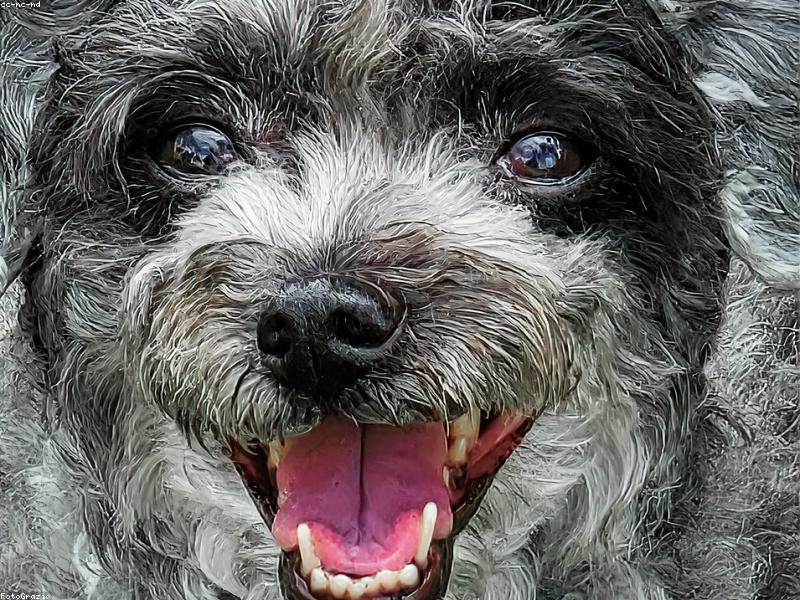
Dogs have up to 300 million olfactory receptors compared with about 6 million in humans. The part of their brain devoted to smell is roughly 40 times larger, proportionally, than ours.
Each nostril samples independently, letting dogs triangulate scent direction. They even exhale through side slits so odor molecules aren't blown away — a continuous "sniff loop."
Dogs detect volatile compounds at parts-per-trillion levels — equivalent to a single drop of liquid in an Olympic swimming pool. This is why they're used for search, medical-alert, and conservation work.
A dog's world is primarily olfactory. Strong or unfamiliar smells can overwhelm anxious dogs, so scent enrichment (snuffle mats, "find it" games) is genuinely good for their welfare.